EN
Price And Market Trend
Aug. 24, 2026
Selecting prestressed steel wire starts with the project drawings and ends with documented acceptance before installation. In this Prestressed Steel Wire Selection Guide for Concrete Construction Projects, I explain how to convert design loads, tensioning methods, concrete transfer strength, corrosion exposure, dimensional requirements, and applicable standards into a purchasing specification. The five primary criteria are the application method, required prestressing force, diameter and grade, surface or corrosion protection, and standard compliance.
Select PC wire from structural drawings, stressing method, transfer strength, exposure class, and anchorage requirements.
Compare tensile strength, diameter, elongation, relaxation loss, surface condition, and standard-specific tolerances before ordering.
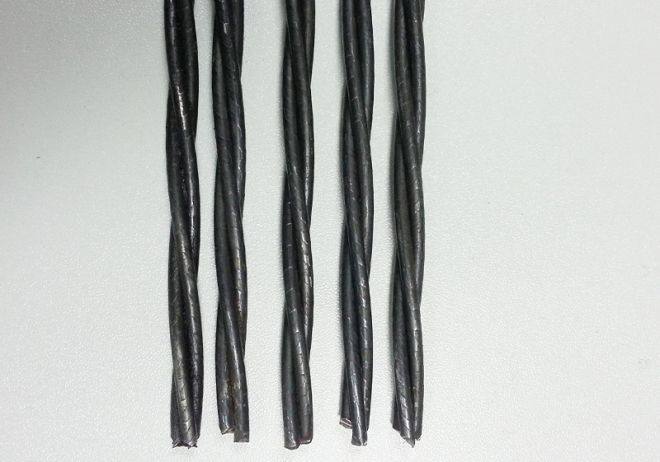
Plain, indented, spiral-ribbed, galvanized, and coated wires serve different bond and corrosion-control requirements.
Reconcile ASTM, EN, BS, ISO, GB/T, and JIS requirements instead of treating standards as interchangeable.
Control procurement risk through mill certificates, coil traceability, dimensional inspection, test results, delivery planning, and receiving checks.
Prestressed steel wire is a cold-drawn, high-tensile carbon steel product used to introduce compression into concrete before or after the concrete carries service loads. In a pretensioning system, I tension the wire against fixed abutments, cast concrete around it, and transfer the force after the concrete reaches the specified transfer strength. In a post-tensioning system, the wire is installed in ducts or protective systems and stressed after concrete hardening.
The wire improves crack control, span capacity, stiffness, and material efficiency when the design correctly accounts for immediate and long-term prestress losses. It does not replace all reinforcement, because ordinary reinforcement may still be required for shear, bursting, handling, temperature effects, ductility, and local detailing. For structural engineers and precast concrete manufacturers, selection must therefore begin with the complete reinforcement schedule rather than with a wire diameter alone.
PC wire is used in prestressed concrete beams, railway sleepers, concrete poles, pipes, piles, panels, bridge components, retaining systems, and other precast or infrastructure products. Plain wire may be suitable where the anchorage and bond arrangement provide the required force transfer, while indented or spiral-ribbed wire can improve mechanical interaction with concrete.
The correct product depends on whether the component is pretensioned or post-tensioned, whether the wire remains bonded, and whether the structure faces chloride, moisture, soil, industrial chemicals, or outdoor exposure. For example, a factory producing standard railway sleepers may prioritize fatigue performance, repeatable dimensions, and rapid cutting, while a coastal infrastructure project may require galvanized or polymer-coated protection.
I recommend using a seven-step selection workflow. Each step should produce a documented decision so that the final purchase order can be checked against the design, production process, and receiving inspection.
First, I identify the required prestressing force, tendon layout, eccentricity, spacing, anchorage arrangement, concrete strength, and allowable stress stated in the project documents. The design team should also identify the required initial stress, expected losses, service stress, transfer stress, ultimate strength, fatigue demand, and crack-width limits.
Pretensioning and post-tensioning use different installation, anchorage, inspection, and protection procedures. Pretensioned products are commonly manufactured in controlled precast facilities, where wires are tensioned before casting and force is transferred through bond after concrete reaches the specified strength. Post-tensioned systems generally use ducts, anchorages, wedges, couplers, grout, grease, sheathing, or encapsulation.
For pretensioned concrete, I check transfer length, bond behavior, wire spacing, release sequence, and the minimum concrete transfer strength. For post-tensioned construction, I check anchorage compatibility, duct geometry, stressing equipment, wedge seating, corrosion protection, and access for inspection.
A wire that satisfies tensile strength requirements may still be unsuitable if its surface profile does not provide the required bond or if its diameter is incompatible with the anchorage. The selection process must therefore connect the wire to the complete pre-tensioning and post-tensioning system.
The surface profile affects bond, transfer behavior, handling, and corrosion protection. I normally compare five main types before requesting quotations.
| PC wire type | Main surface characteristic | Typical selection logic |
|---|---|---|
| Plain PC wire | Smooth surface | Suitable where design, anchorage, and bond requirements permit a plain profile |
| Indented PC wire | Repeated mechanical indentations | Used when improved mechanical bond and reduced longitudinal slip are required |
| Spiral-ribbed PC wire | Continuous or repeated helical ribs | Used for stronger mechanical interaction with concrete in selected precast products |
| Galvanized PC wire | Zinc protection over the steel surface | Considered for specified outdoor or corrosive exposure conditions |
| Polymer-coated PC wire | HDPE or other protective coating | Used where electrical isolation, environmental protection, or special corrosion resistance is required |
Indented and spiral-ribbed wires should be ordered with the specified indentation or rib geometry, not simply described as “ribbed.” I check the number of lines, spacing, depth, pitch, and permitted dimensional variation against the applicable standard or approved drawing.
Galvanized and coated products require additional checks. The coating must not interfere with gripping, cutting, bond, bending, or anchorage installation, and the project specification must state whether the wire is intended to remain bonded or isolated from concrete.
The most common selection errors occur when buyers choose a diameter based on past projects without checking the new design area, equipment capacity, or anchorage dimensions. Common prestressing wire strength levels include approximately 1,570 MPa, 1,670 MPa, 1,770 MPa, and 1,860 MPa, although the permitted grades depend on the governing standard and product type.
Low-relaxation PC wire is processed to reduce stress loss under sustained strain and temperature. Relaxation is important because a loss of prestress reduces the compressive reserve in concrete and can increase deflection or cracking over the service life.
The purchase specification should state the relaxation test condition, test duration, initial stress level, and temperature. A product described as “low relaxation” without a numerical limit is incomplete for procurement. As a reference point, some prestressing products are specified with relaxation limits below 2.5% under defined test conditions, but the applicable value must come from the selected standard and project requirements.
I also separate relaxation from other losses. Elastic shortening, concrete creep, shrinkage, anchorage seating, friction, and temperature effects can contribute to the total reduction in force. The design calculation should identify each loss component rather than applying a single unexplained percentage.
Corrosion protection should be selected from the exposure environment and maintenance strategy. I consider chloride exposure, marine spray, deicing salts, groundwater, carbonation, industrial chemicals, wet-dry cycles, cracks, drainage, and the expected design life.
Plain and uncoated wire may be appropriate inside adequately protected concrete where cover, crack control, and concrete permeability satisfy the project requirements. Galvanized wire may be considered for specified external or moisture-prone applications, while polymer-coated wire can provide an additional barrier where the design requires isolation or special environmental protection.
Protection should be evaluated as a system. Coating thickness, adhesion, holiday detection, cut-end protection, storage humidity, handling damage, and compatibility with anchorage components all affect performance. A coating that is damaged during coil unwinding or cut-length preparation may create a local corrosion risk even when the original product certificate is compliant.
After the area and layout are confirmed, I calculate the required mass using nominal unit weight, total installed length, and the number of components.
A complete specification should contain more than a grade name. I include nominal diameter, tensile strength, minimum elongation, relaxation classification, surface profile, coil or cut-length format, mechanical test requirements, chemical composition limits where applicable, dimensional tolerances, packaging, marking, and inspection documents.
| Specification item | What I verify before ordering |
|---|---|
| Nominal diameter | Diameter range, ovality, measuring method, and permitted tolerance |
| Tensile strength | Minimum value, test method, and actual batch results |
| Elongation | Gauge length, minimum percentage, and test temperature |
| Relaxation | Duration, initial stress, temperature, and maximum permitted loss |
| Surface condition | Rust, scale, pits, seams, cracks, coating defects, ribs, or indentations |
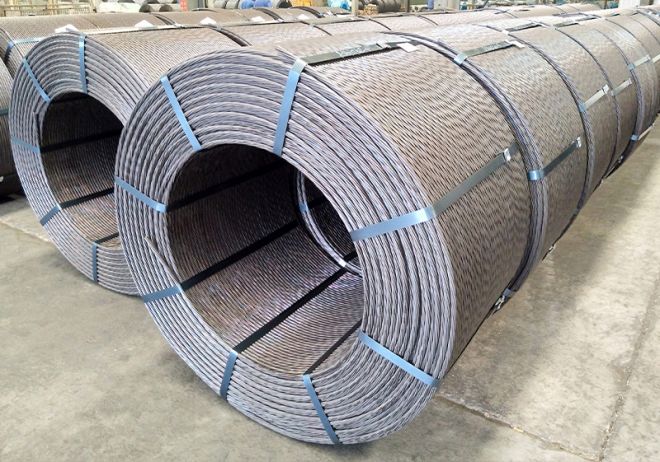
| Coil dimensions | Inner diameter, outer diameter, mass, lifting points, and unwinding direction |
| Straightness | Requirements for cut-to-length processing and placement |
| Chemical composition | Carbon, manganese, silicon, sulfur, phosphorus, and alloy limits where specified |
| Traceability | Heat number, coil number, production date, and linked test certificate |
| Standards | Edition, grade designation, product category, and acceptance criteria |
A mill test report should identify the heat number and coil number that correspond to the shipment. I compare the report against the purchase order, packing list, tags, and physical markings. If the document lists only a general product name without batch identification, I treat traceability as incomplete.
Different standards may use different grade names, test procedures, tolerances, and acceptance rules. I do not combine the most favorable values from several standards to create a new specification. Instead, I identify one governing standard and use other standards only as supplementary references after the engineer approves the comparison.
| Standard family | Typical use in procurement review | Control point |
|---|---|---|
| ASTM | North American project specifications and prestressing products | Confirm exact ASTM product designation and grade |
| EN | European specifications for prestressing steels | Check product class, relaxation category, and conformity route |
| BS | British and legacy project requirements | Confirm whether the project uses a current or retained edition |
| ISO | General international testing or quality frameworks | Verify whether ISO is a product standard or test reference |
| GB/T | Chinese national requirements for prestressing steel | Confirm current edition and product classification |
| JIS | Japanese project and equipment requirements | Match designation, dimensions, and mechanical limits |
| Project specification | Owner-specific acceptance requirements | Treat as controlling where it is more restrictive |
For international purchasing, I prepare a compliance matrix with four columns: project requirement, supplier declaration, test evidence, and unresolved difference. This prevents a supplier from stating that a product is “equivalent” without showing the exact tensile, elongation, relaxation, dimensional, and surface requirements.
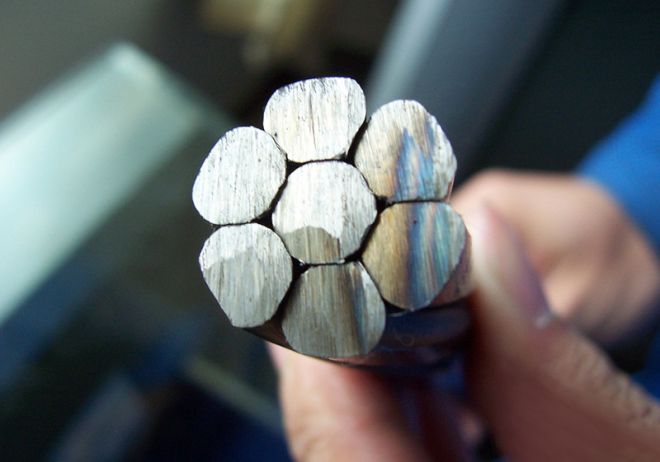
Prestressed steel wire is generally a single wire, while prestressed steel strand consists of multiple wires twisted around a common axis. Two-wire, three-wire, and seven-wire strands are selected when the structural design and anchorage system are intended for strand rather than individual wire.
The main difference is not only the number of wires. Strand requires compatible wedges, anchor plates, ducts, couplers, stressing jacks, and grips, while individual PC wire may use different anchorage and production equipment. A 12.7 mm or 15.24 mm strand designation should not be substituted for a single-wire diameter without redesign and approval.
| Factor | PC wire | PC strand |
|---|---|---|
| Form | Single high-tensile wire | Two, three, or seven wires twisted together |
| Bond profile | Plain, indented, or spiral-ribbed options | Helical outer geometry with strand-specific behavior |
| Equipment | Wire grips, individual anchors, cutting tools | Strand wedges, anchorages, jacks, and ducts |
| Common use | Sleepers, poles, pipes, beams, and specialized precast units | Bridges, buildings, slabs, piles, and post-tensioned members |
| Procurement issue | Diameter and surface profile are critical | Nominal strand diameter and strand construction are critical |
| Substitution | Requires design review | Cannot be assumed interchangeable with PC wire |
When I compare PC wire and PC strand, I first identify the stressing system. If the factory has existing strand jacks and wedge anchors, strand may reduce equipment changes. If the product line uses individual wire tensioning and fixed-length cutting, PC wire may provide better process compatibility.
Precast beams typically require a wire or strand arrangement that satisfies flexural capacity, transfer length, crack control, and lifting conditions. I check the minimum concrete strength at release, tendon spacing, end-zone reinforcement, and the sequence used to release the prestress.
For thin panels, diameter selection must consider cover, spacing, local congestion, and the risk of splitting during transfer. A smaller wire with more tendons may distribute force differently from a larger wire with fewer tendons, even when the total steel area is similar.
Railway sleepers are exposed to repeated wheel loads, vibration, handling, and environmental cycles. Wire selection should include fatigue performance, bond behavior, dimensional consistency, and resistance to damage during automated production.
Concrete poles may use high-tensile wire in long repetitive production runs. I prioritize coil unwinding behavior, surface condition, straightness after cutting, reliable tensile results, and compatibility with the pole mold and cage arrangement.
Bridge construction often involves higher design loads, long spans, repetitive precast production, or post-tensioning systems. I verify fatigue requirements, relaxation classification, anchorage compatibility, duct geometry, corrosion protection, and inspection access.
For bridge work, the project specification may require additional controls for coating, grout, chloride exposure, or fatigue testing. A supplier’s standard catalog designation is not sufficient unless it matches the bridge authority’s approved material schedule.
Concrete pipes and piles may use wire arrangements that prioritize circumferential force, crack control, and repetitive manufacturing. I check wire placement, transfer length, mold clearance, cutting tolerances, and the required force after production.
Infrastructure products often have strict production cycles. If wire delivery arrives in mixed coil sizes or with inconsistent tags, production stoppages can cost more than a modest difference in purchase price. For this reason, packaging and batch segregation belong in the technical specification.
I evaluate suppliers through four categories: technical compliance, manufacturing control, delivery capability, and commercial transparency. The supplier should provide a product data sheet, applicable standard declaration, sample mill certificate, inspection plan, packaging details, production lead time, and a clear explanation of nonconforming-product handling.
YUANXIAN is a relevant example of a supplier with a broad prestressed-material portfolio. Its published product range includes plain, indented, spiral-ribbed, cut-to-length, and coated prestressed wire options, as well as two-wire, three-wire, and seven-wire strand products. The company states that it began producing prestressed steel products in 2007, operates nine production lines, and reports an annual high-performance steel-material capacity of approximately 400,000 tons.
Supplier capacity is useful, but I still verify the specific factory, production line, batch controls, and inspection records for the ordered product. YUANXIAN also describes development work involving a prestressed steel product with a minimum breaking strength of 2,360 MPa and improvements to drawing dies and rust-prevention materials. These claims should be treated as product-development information until the project team reviews the corresponding test evidence and specification compliance.
Confirm the legal manufacturer and shipping entity.
Request the exact product standard and edition.
Require heat number and coil number traceability.
Review tensile, elongation, relaxation, and dimensional test data.
Confirm surface profile measurements for indented or spiral-ribbed wire.
Check whether galvanized or polymer-coated wire has coating test results.
Verify monthly production capacity against the project delivery schedule.
Request the proposed inspection and pre-shipment release procedure.
Define replacement, claim, and nonconformance response periods.
Separate material price, cutting charges, packaging, inland freight, ocean freight, insurance, duties, and local delivery.
Receiving inspection should begin before the coil enters the production area. I compare the purchase order, packing list, coil tags, heat numbers, certificates, and physical markings. Any mismatch should be quarantined until the supplier provides a documented explanation.
The visual inspection should check rust scale, pitting, cracks, seams, scratches, coating damage, oil contamination, kinks, broken wires, and deformation. For dimensional inspection, I measure diameter at multiple locations with calibrated equipment and record ovality, rib or indentation dimensions, and cut-length tolerance where applicable.
A practical sampling plan may include one sample from each heat or coil group, depending on the project specification and risk level. Tensile testing should be performed through an approved laboratory or calibrated in-house facility, with the test method and machine calibration records retained. If the order is large or the application is safety-critical, I may require independent witness testing before release.
This Prestressed Steel Wire Selection Guide for Concrete Construction Projects shows why the correct product cannot be selected from diameter and price alone. I recommend starting with the drawings, calculating the required steel area, confirming pretensioning or post-tensioning, selecting the surface type, verifying tensile and relaxation requirements, matching corrosion protection to exposure, and calculating quantity with documented production allowances.
For each quotation, I would compare the same grade, diameter, surface profile, standard edition, test requirements, delivery basis, and traceability conditions. I would also require mill certificates, coil identification, dimensional checks, and acceptance testing before installation. Suppliers such as YUANXIAN can be evaluated against these criteria by reviewing their product range, production capacity, test documentation, and ability to support the specific construction application.
The next step is to issue a project-specific inquiry containing the design loads, wire type, diameter, grade, standard, quantity, packaging, delivery date, inspection plan, and anchorage requirements. That process gives structural engineers, precast manufacturers, bridge contractors, and procurement teams a measurable basis for selecting prestressed steel wire and controlling compliance, delivery risk, and total cost.
HOT PRODUCTS

Yuanxian High-tech Material is a company serving a worldwide customers base providing innovative and reliable product solution that recognizes the value of customer care.
+86 180 2006 1362
Haitai Huake Third Road No.1, Huayuan Industrial Zone, Binhai High Tech Zone, Tianjin, china
Quick Links
Product Category

Request a Quote
Welcome to subscribe toour email message!

Send a Message