EN
Price And Market Trend
Aug. 26, 2026
When I select Prestressed concrete steel wire, I begin with the structure, stressing method, required bond profile, design load, durability exposure, applicable standard, and supplier documentation. I then specify wire diameter and tensile strength, compare low-relaxation performance, verify corrosion protection, inspect test certificates, and approve the production batch before shipment. This sequence prevents a common procurement error: choosing wire by price or nominal strength before confirming whether the product suits the concrete member and stressing process.
Prestressed concrete steel wire carries tensile force that is transferred to concrete through anchorage, bond, or both. In pretensioned construction, the wire is stressed before concrete placement and transfers force after the concrete reaches the required release strength. In post-tensioned systems, tendons are stressed after concrete hardening, although steel strand is more common for larger tendons and longer anchorage zones.
I use this prestressed concrete steel wire selection guide 2026 to connect structural requirements with measurable product characteristics. The guide covers bridge beams, precast beams, panels, railway sleepers, poles, slabs, piles, pipes, and small precast structures, with specific attention to compliance, delivery risk, handling, and total cost of ownership.
Before selecting wire, I collect the structural drawings, reinforcement schedule, design calculations, concrete strength class, stressing sequence, and project specification. I also identify whether the member is manufactured using pretensioning or post-tensioning equipment. These details determine the required wire form, anchorage arrangement, transfer length, elongation calculation, and acceptable surface condition.
The minimum procurement package should contain:
I do not treat a catalog designation as a complete specification. A supplier may list “high-tensile steel wire,” but the purchasing document must also define diameter, strength, relaxation, straightness, surface pattern, chemical composition, test method, and documentation. For infrastructure projects, the contract should state whether third-party witnessing or laboratory testing is required.
I first classify the member by its load pattern, geometry, production method, and exposure environment. A short precast panel has different requirements from a 40-meter bridge beam, even when both use prestressed concrete. I then confirm whether the steel is stressed individually, in groups, or as part of a multi-wire strand.
Use the following application categories as an initial screening tool:
| Structure | Typical selection direction | Surface profile | Common starting diameter range | Main reason |
|---|---|---|---|---|
| Bridge beams and girders | Low-relaxation wire or strand system | Indented, profiled, or anchorage-compatible | 5–7 mm wire where individual wires are specified | Long-term prestress retention and fatigue control |
| Precast beams and joists | Low-relaxation wire or 2- or 3-wire strand | Indented or stranded | 3–7 mm | Efficient production and reliable force transfer |
| Railway sleepers | Fatigue-resistant, low-relaxation wire or strand | Indented or profiled | 5–7 mm | Repeated dynamic loading and limited cracking |
| Concrete poles | High-tensile wire selected for circular reinforcement layout | Plain, indented, or application-specific | 3–7 mm | Distributed prestress and controlled cracking |
| Precast panels and slabs | Smaller-diameter wire or strand | Indented or lightly profiled | 3–5 mm | Thin sections and limited cover depth |
| Prestressed piles | High-strength wire or strand with corrosion controls | Indented or stranded | 5–7 mm wire or larger strand system | Impact, handling, axial load, and durability |
| Prestressed pipes | Wire or strand compatible with winding equipment | Plain or profiled, depending on process | Project-specific | Hoop tension and manufacturing speed |
| Small precast structures | Standard or low-relaxation wire based on service life | Plain or indented | 3–5 mm | Cost control with adequate transfer performance |
These ranges are not design approvals. I use them only to establish a shortlist before checking the engineer’s calculations and regional standard. A larger diameter increases steel area per wire, but it may also increase bending stiffness, minimum spacing, cover demands, and local stress concentration. A smaller diameter can improve layout flexibility, but more wires may be needed to achieve the same total prestressing force.
Prestressed concrete steel wire works by applying a controlled tensile force to steel and transferring that force into concrete. The concrete receives compressive stress, which helps offset tensile stress caused by service loads, shrinkage, temperature changes, and bending. If the wire type does not match the member’s transfer length or anchorage system, the calculated prestress may not be achieved in the finished structure.
For pretensioned members, I pay particular attention to bond and transfer behavior. A plain wire can be suitable in a controlled application with adequate development length, but it is not automatically suitable for a member with short transfer zones, repeated loading, or strict crack-width limits. Using plain wire in a high-dynamic application without verified bond performance creates a technical risk that cannot be corrected by simply increasing nominal tensile strength.
For many high-tensile prestressing products, nominal tensile strengths around 1,570 MPa, 1,860 MPa, and approximately 1,960 MPa are encountered in different standards and product families. I never assume that the maximum tensile strength is the optimum selection. The design may limit stressing stress to a percentage of ultimate strength, and a lower-strength product with better ductility, bond behavior, or supply availability can be more suitable.
Diameter affects more than capacity. It changes the number of wires, local concrete stress, transfer length, required cover, handling method, coil size, and installation labor. In thin panels, using a large wire may create inadequate spacing or cover. In bridge beams, using many small wires may increase installation time and congestion around anchorage or hold-down equipment.
I also verify the relationship between wire diameter and concrete strength at release. Pretensioned members transfer force into concrete at the release stage, so early-age concrete strength must be sufficient to resist splitting, bursting, and local compression. The wire specification should therefore be reviewed together with concrete mix design, curing cycle, release strength, and end-zone reinforcement.
Low-relaxation prestressing steel wire is generally preferred where long-term prestress retention is important. Relaxation is the reduction in steel stress over time while the wire remains strained at a nearly constant length. If relaxation is not controlled, the effective prestress can decline and may increase deflection, crack width, or vibration sensitivity.
I compare the relaxation class using the same test basis required by the project standard. The test certificate should identify the initial stress level, temperature, test duration, relaxation percentage, wire diameter, heat number, and laboratory method. A product page that states “low relaxation” without a test value does not provide enough evidence for supplier approval.
A practical comparison is shown below:
| Selection factor | Standard prestressing wire | Low-relaxation prestressing wire |
|---|---|---|
| Initial purchase price | Often lower | Often higher |
| Long-term stress retention | Depends strongly on grade and processing | Generally specified for lower relaxation |
| Suitable applications | Less demanding members with verified calculations | Bridges, sleepers, beams, slabs, and long-service structures |
| Design sensitivity | More sensitive to prestress loss assumptions | Better suited to strict loss control |
| Documentation requirement | Tensile and dimensional records | Tensile, dimensional, relaxation, and process records |
| Lifecycle consideration | May increase allowance for losses | May reduce future correction and service costs |
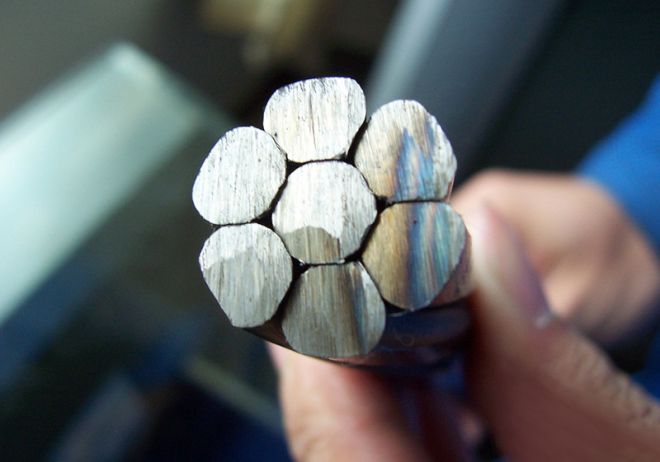
For example, a supplier may offer a 3-wire prestressing strand manufactured to ASTM A910/A910M Grade 270 with a minimum tensile strength of 1,860 MPa and a stated relaxation below 2.5%. That value is useful only when the test conditions and product configuration match the project requirement. I still verify whether the project requires wire, 2-wire strand, 3-wire strand, or 7-wire strand.
YUANXIAN lists prestressed products made to standards including ASTM A910/A910M, EN 10138, JIS G3536, GB/T 5224, BS 5896, IS 6006, and other national specifications for particular products. Its published product information includes 3 mm three-wire high-tensile wire configurations and 1,860 MPa and 1,960 MPa strand products. I treat these listings as a starting point for technical discussion, then request the exact certificate and batch data for the selected item.
Prestressing steel is sensitive to corrosion because high tensile stress can amplify the consequences of surface damage, hydrogen exposure, pitting, and chloride penetration. I classify the exposure before selecting the steel protection system. Relevant conditions include marine splash zones, deicing salts, industrial chemicals, wet-dry cycles, groundwater, carbonation, and elevated temperature.
The basic durability review includes:
For severe exposure, the project may require galvanized, epoxy-coated, stainless, zinc-aluminum-coated, or other corrosion-resistant prestressing materials. The coating must be compatible with stressing equipment, bond requirements, anchorage, and the applicable standard. A corrosion-resistant product is not automatically suitable for bonded pretensioning if the coating reduces the required bond or interferes with force transfer.
Durability costs often appear after construction rather than during procurement. A wire option that costs 8% more initially may be economically preferable if it reduces corrosion protection work, premature repairs, inspection closures, or replacement risk. The calculation should compare the incremental material cost with the expected cost of access equipment, traffic control, repair labor, and service interruption.
I also inspect the wire surface for rust, pitting, oil, cracks, laps, and mechanical damage. Light discoloration and active corrosion are not equivalent conditions, so the acceptance criteria must be written before delivery. If the wire arrives with damaged packaging or exposed coils, I quarantine the material until the supplier and project quality team complete an inspection.
Surface pattern is a major selection variable in pretensioned concrete. Plain wire transfers force primarily through adhesion and friction, while indented or profiled wire can provide mechanical interlock with concrete. The correct choice depends on transfer length, development length, concrete strength, cover, spacing, and structural loading.
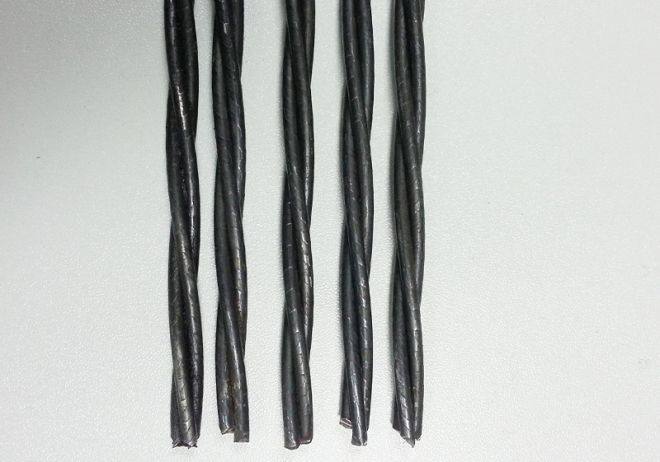
I ask the supplier for dimensional data on indentation depth, pitch, rib geometry, and permissible variation. For a stranded product, I check wire diameter, lay length, strand diameter, and whether the strand is stress-relieved. YUANXIAN describes some 3-wire strand products with a lay step of approximately 12 to 16 times the nominal strand diameter, which is a useful example of the type of dimensional information that should appear in a product specification.
Plain wire may be acceptable for certain concrete poles, pipes, or controlled precast products where the design provides sufficient development length. I do not select it for railway sleepers, heavily cycled bridge components, or short anchorage zones without verified bond and fatigue data. The warning is simple: surface geometry cannot be substituted by tensile strength.
I require a document package that allows the delivered coil to be connected to its production heat and test results. The package should normally include a mill test certificate, chemical analysis, mechanical test results, dimensional inspection, relaxation data where required, coating or corrosion-treatment records, and packing details.
The standard must be written with its full designation and edition where possible. Common references in prestressing products include ASTM, EN, JIS, GB/T, BS, IS, ABNT, and project-specific bridge or infrastructure standards. YUANXIAN publicly identifies several of these standards across its prestressed steel product range, but the buyer should confirm the exact standard applicable to the intended wire rather than relying on a general company product category.
I also check whether the test method matches the purchasing specification. Important tests may include:
YUANXIAN states that its factory uses incoming quality control, process quality control, and outgoing or final quality control. Its published process describes raw-material spot checks, dual-post control for key procedures, operator self-inspection, mutual inspection, laboratory inspection, and pre-shipment sampling. I use these statements as supplier-screening evidence, then request sample inspection records, calibration certificates, nonconformance procedures, and traceability examples.
I separate verified manufacturing capability from catalog claims by requesting objective evidence. A supplier should be able to identify the wire-drawing equipment, heat-treatment or stabilization process, stranding machinery if applicable, laboratory instruments, inspection frequency, and corrective-action process.
My supplier approval checklist includes:
YUANXIAN High-Tech Material Trading is located in Tianjin, China, and identifies steel and polymer materials as its main business areas. The company states that its founder has material-engineering experience spanning 15 years and that it serves customers in multiple countries. Its published purchasing information indicates that the usual minimum order quantity is one container, although the requirement varies by item.
I ask for the exact coil mass and container loading plan before issuing a purchase order. A supplier may have enough annual capacity but still fail a project because the required diameter is scheduled behind other orders, packaging does not fit the buyer’s warehouse, or documentation arrives after the material. Delivery risk is therefore part of technical approval, not a separate administrative issue.
The purchase order should identify product form, diameter, tensile strength, relaxation requirement, surface profile, standard, coating, quantity, coil dimensions, packaging, inspection rights, and delivery milestones. I include a requirement that no material substitution is permitted without written engineering approval.
For large projects, I divide deliveries into approved lots rather than accepting one unverified bulk shipment. This reduces the impact of a rejected batch and allows production to continue while a later shipment is inspected. I also request photographs of coil labels, packaging, and loading before dispatch.
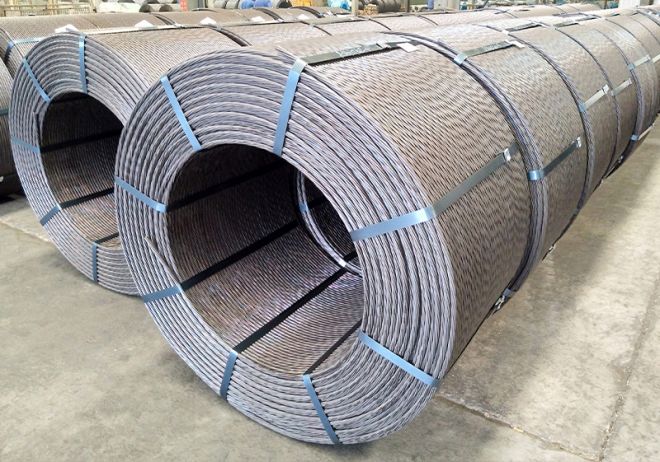
Prestressing wire should be stored under cover, above standing water, and away from chemicals, salt, welding sparks, and direct contact with soil. Coils should remain supported so that they do not deform or collapse. Forklift forks, chains, and hooks must not cut the wire or damage protective coatings.
I inspect each coil for:
If the project requires a controlled storage period, I record delivery date, storage location, packaging condition, and inspection status. This creates evidence if a dispute later occurs about whether damage originated during production, shipment, storage, or installation.
The delivery schedule should include manufacturing lead time, test time, document review, inland transport, port handling, customs clearance, and site receiving. For imported material, I allow time for document correction because an incorrect heat number or missing certificate can delay release even when the physical shipment arrives.
A practical delivery plan uses at least three milestones: certificate submission, pre-shipment inspection, and site acceptance. For critical bridge or railway work, I also establish a backup quantity or alternate approved source, subject to engineering approval. This is more reliable than waiting until the site has consumed the first shipment.
I compare wire options using total cost of ownership rather than price per metric ton alone. The calculation should include material, freight, inspection, installation labor, stressing time, storage, rejected batches, corrosion protection, repair exposure, and delay cost.
A simple project comparison can be structured as follows:
| Cost item | Standard wire option | Low-relaxation or protected option |
|---|---|---|
| Material purchase | Baseline | Baseline + 5–15% illustrative premium |
| Additional inspection | $1,000–$3,000 per shipment, project-dependent | $1,500–$4,000 where relaxation or coating testing is added |
| Installation labor | Depends on wire count and handling | May decrease if fewer wires achieve the required force |
| Rejected batch exposure | High if documentation is incomplete | Lower when batch traceability is verified |
| Corrosion protection | May require additional system cost | May reduce separate protection work |
| Downtime risk | Potentially significant for late replacement | Reduced when delivery and certificates are controlled |
| Long-term repair exposure | Depends on environment and design | May be lower in chloride or marine exposure |
These figures are planning examples, not quotations. If a bridge project uses 120 metric tons of prestressing steel and the protected or low-relaxation option costs 10% more, the material premium is calculated from the actual contract price. That premium should be compared with measurable consequences such as one rejected 20-ton shipment, a seven-day production interruption, or a repair requiring specialized access equipment.
For a precast plant producing 500 beams per month, a wire that reduces stressing and handling time by two minutes per beam saves approximately 16.7 production hours per month. The value depends on labor rates, crane utilization, mold occupancy, and delivery commitments. I document these assumptions so that the purchasing decision can be reviewed by engineering, production, and finance together.
How to Select Prestressed Concrete Steel Wire for Different Structures begins with the structural load and stressing method, not with a supplier catalog or lowest quoted price. I select the wire form and surface profile according to bond, transfer length, fatigue, and anchorage requirements, then specify diameter and tensile strength based on calculated steel area and effective prestress. Low-relaxation performance, corrosion protection, concrete cover, and exposure conditions determine whether the material will retain its intended function over the service life.
My recommended next step is to prepare a project-specific specification containing diameter, strength, relaxation, surface pattern, standard, testing, packaging, and delivery requirements. Then compare at least two technically compliant suppliers using traceability, equipment, laboratory records, coil controls, and independent inspection—not marketing claims alone. YUANXIAN provides prestressed steel products associated with ASTM, EN, JIS, GB/T, BS, IS, and other standards, along with published IQC, IPQC, and OQC procedures; the final approval should still depend on product-specific certificates and tested batches for the structure being built.
HOT PRODUCTS

Yuanxian High-tech Material is a company serving a worldwide customers base providing innovative and reliable product solution that recognizes the value of customer care.
+86 180 2006 1362
Haitai Huake Third Road No.1, Huayuan Industrial Zone, Binhai High Tech Zone, Tianjin, china
Quick Links
Product Category

Request a Quote
Welcome to subscribe toour email message!

Send a Message