EN
Bridge System
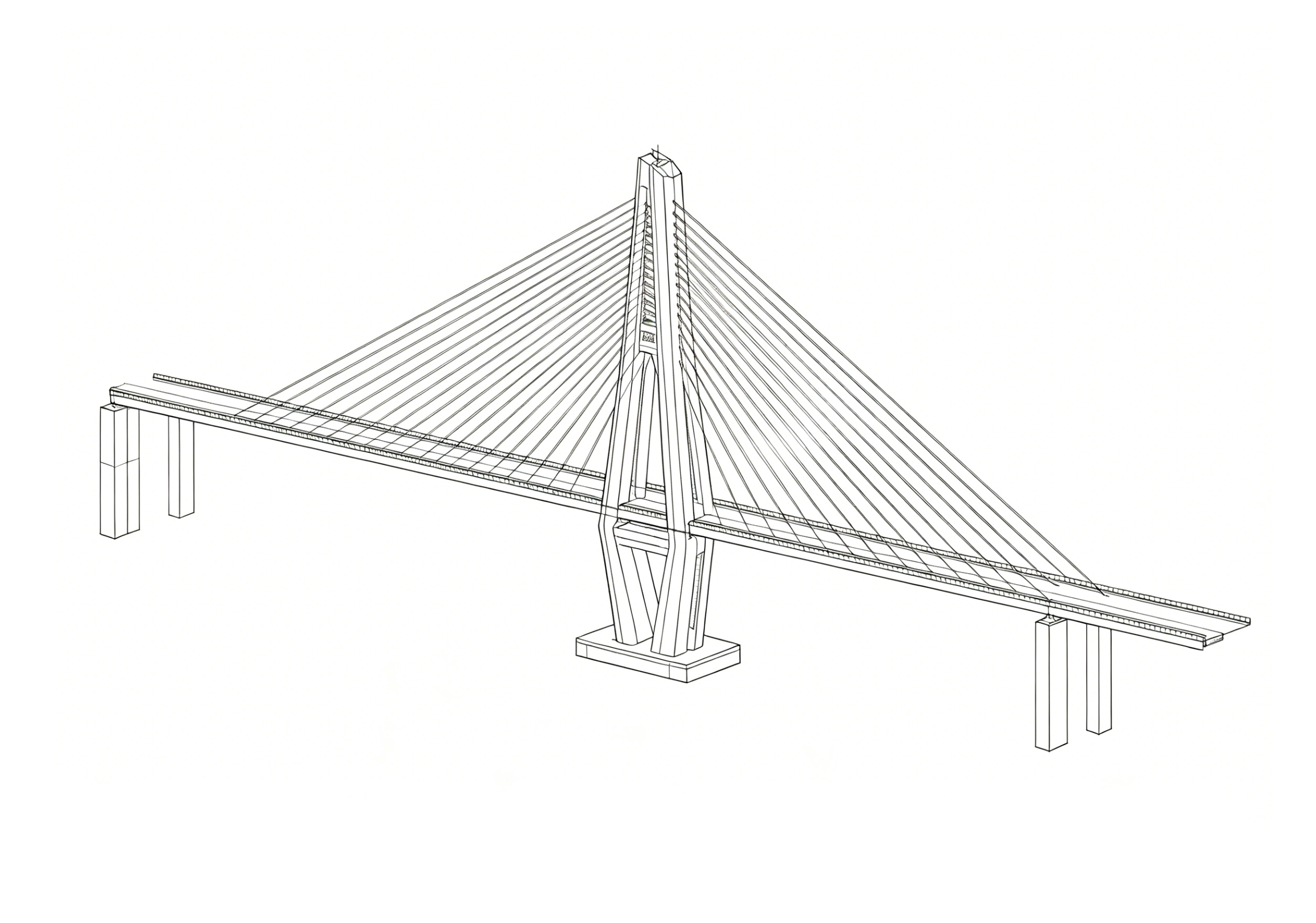
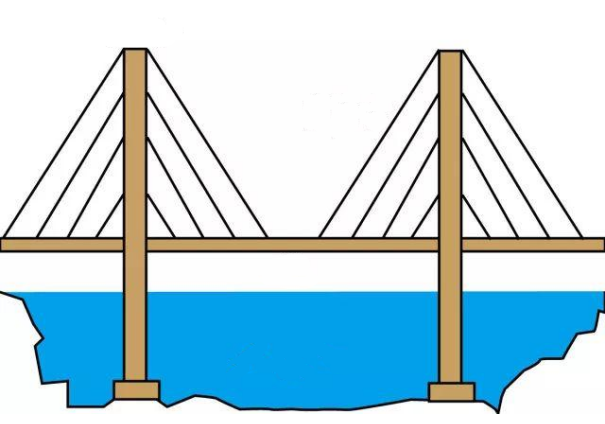
The extradosed cable-stayed bridge, also known as a “partial cable-stayed bridge”, is a bridge structure between a beam bridge and a traditional cable-stayed bridge. The height of the main beam of the extradosed cable-stayed bridge is about 1/2 of that of the continuous beam.
The setting of the tower bridge and cable-stayed bridge gives it the magnificent and spectacular feeling of a cable-stayed bridge. It can be designed into different structural forms such as single-tower double-span, double-tower three-span, and multi-tower multi-span. The single-span diameter is appropriate in the range of 100~300m.
ADVANTAGES
The construction method of the extradosed cable-stayed bridge is basically the same as that of the continuous beam bridge, and the suspension pouring method can be used for construction. Due to the extradosed cable-stayed bridge, the bridge tower is relatively short and the construction of the bridge tower is relatively simple. The cost of the bridge is lower than that of ordinary cable-stayed bridges, which have considerable economic benefits.
Extradosed cable-stayed bridges have the following characteristics:
1. The tower is short. The tower height of a extradosed cable-stayed bridge is only the same as that of a cable-stayed bridge.
2. The main beam of a extradosed cable-stayed bridge has high stiffness and is the main load-bearing component. The height to span ratio of the main beam of a extradosed cable-stayed bridge is generally higher than that of a typical cable-stayed bridge of the same span, but lower than that of a continuous beam bridge of the same span.
3. The stress amplitude of the cable is small. The stress amplitude of the cables in a extradosed cable-stayed bridge is only one-third of that of a typical cable-stayed bridge.
4. The cable system of the extradosed cable-stayed bridge is a steel strand system. Due to the fact that some cable-stayed bridges generally adopt a saddle structure at the top of the tower, the traditional parallel steel wire cable system cannot continuously pass through the saddle area at the top of the tower, so the cable can only use a steel strand system.
USE
The stress situation of extradosed cable-stayed bridges is different from that of high tower cable-stayed bridges. The cables only bear part of the load, and a part of the load is borne by the bending and shear of the main beam. It is a bridge type that falls between a beam bridge and a general cable-stayed bridge, combining the characteristics of both.
SPECIFICATIONS
The cable system of a extradosed cable-stayed bridge consists of three main components: cable body, main tower saddle, and cable anchoring system.
Cable:
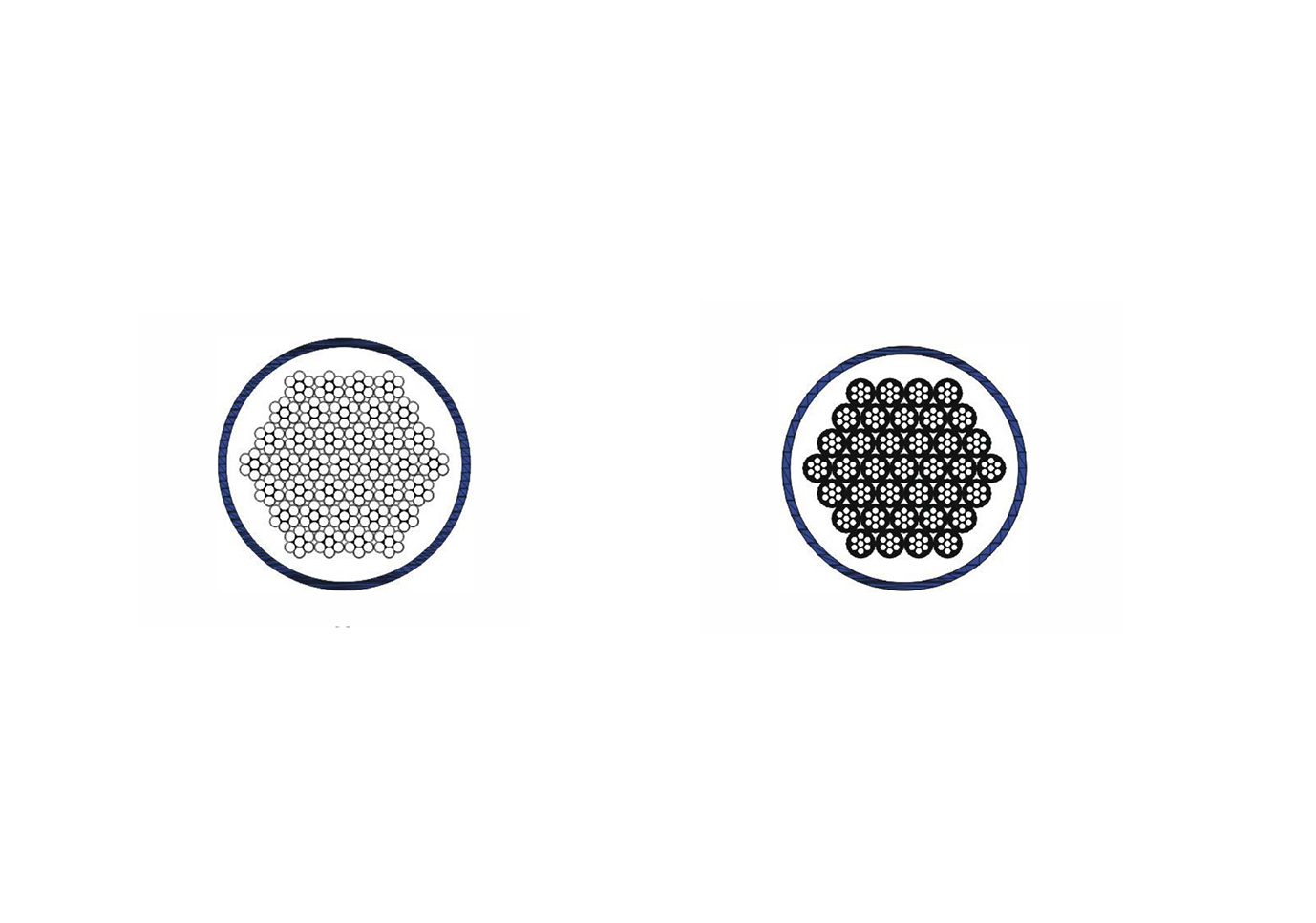
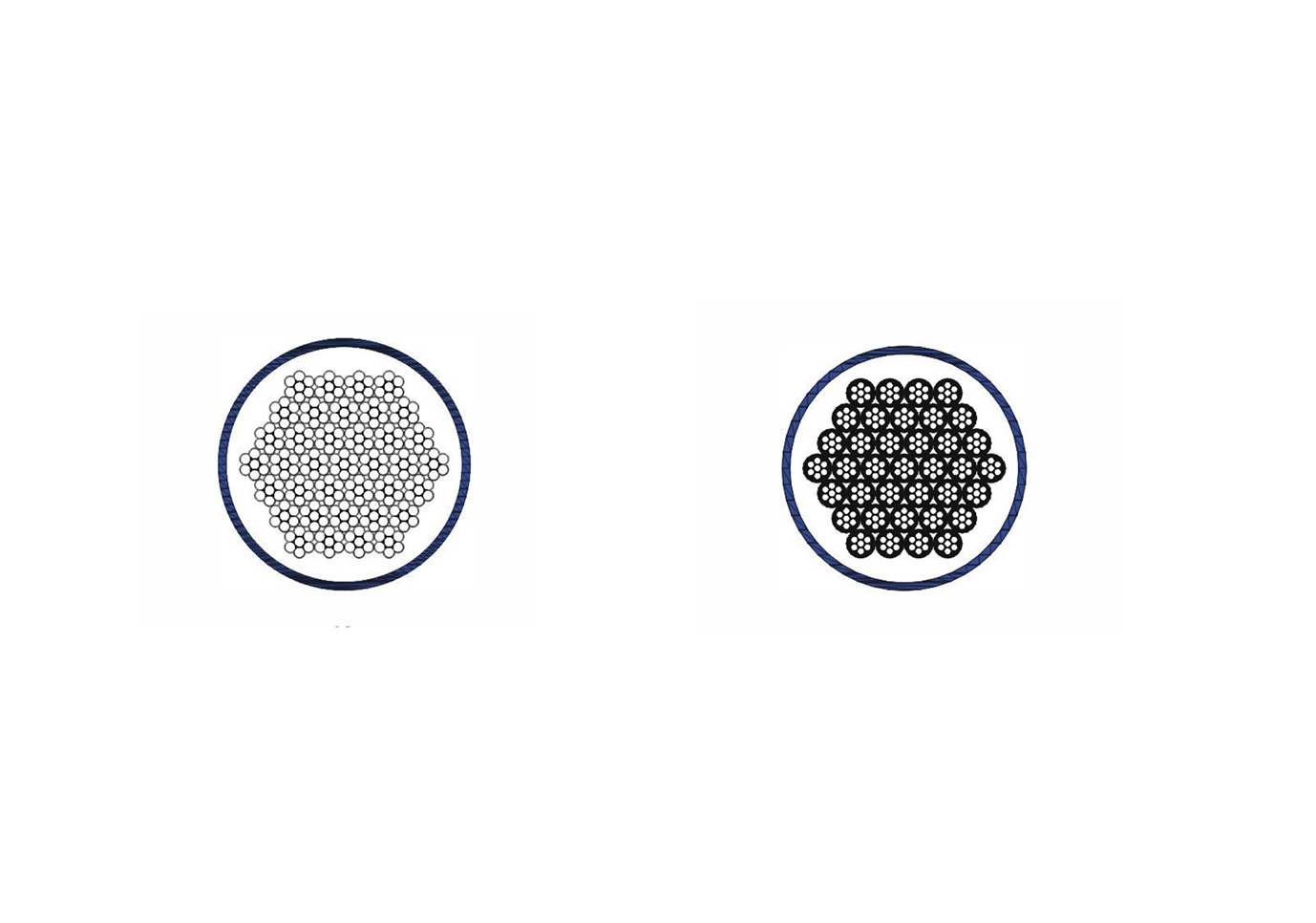
There are two commonly types of cables in the cable system of extradosed cable-stayed bridges:
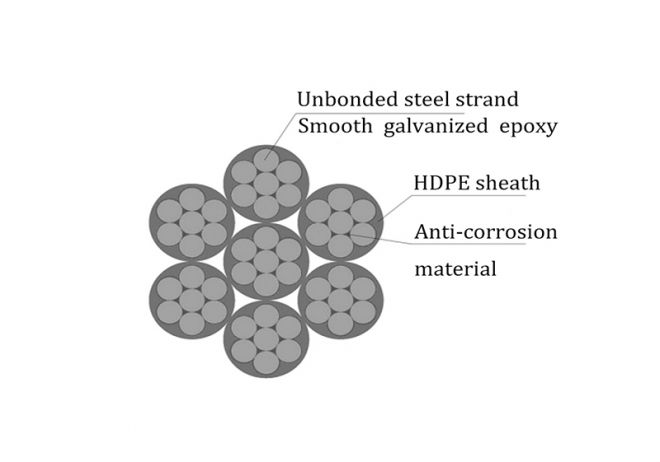
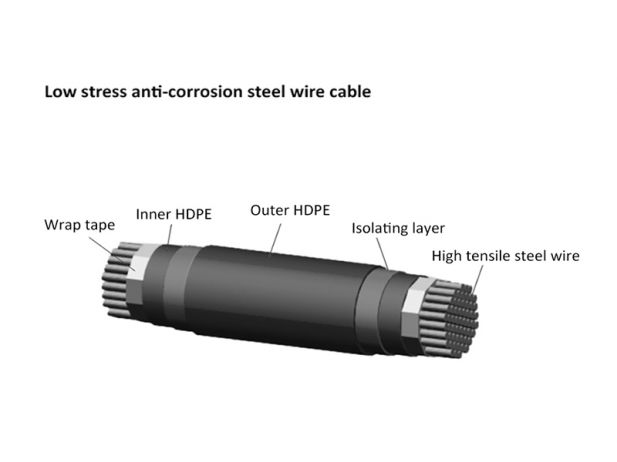
1) One is composed of multiple smooth epoxy coated steel strand and an outer HDPE pipe;
2) Another type is composed of multiple PE coated epoxy coated steel strand and an outer HDPE pipe. The outer HDPE pipe can be a smooth round pipe or a double helix round pipe that is resistant to wind, rain, and vibration.
Main tower saddle:
Unlike general cable-stayed bridges, extradosed cable-stayed bridges generally do not have anchoring zones on the main tower. The cables need to be anchored at both ends to the main beam through the main tower saddle. The main function of the main tower cable saddle in a extradosed cable-stayed bridge is to allow the cables to continuously pass through the main tower, while also ensuring the convenience of cable replacement.
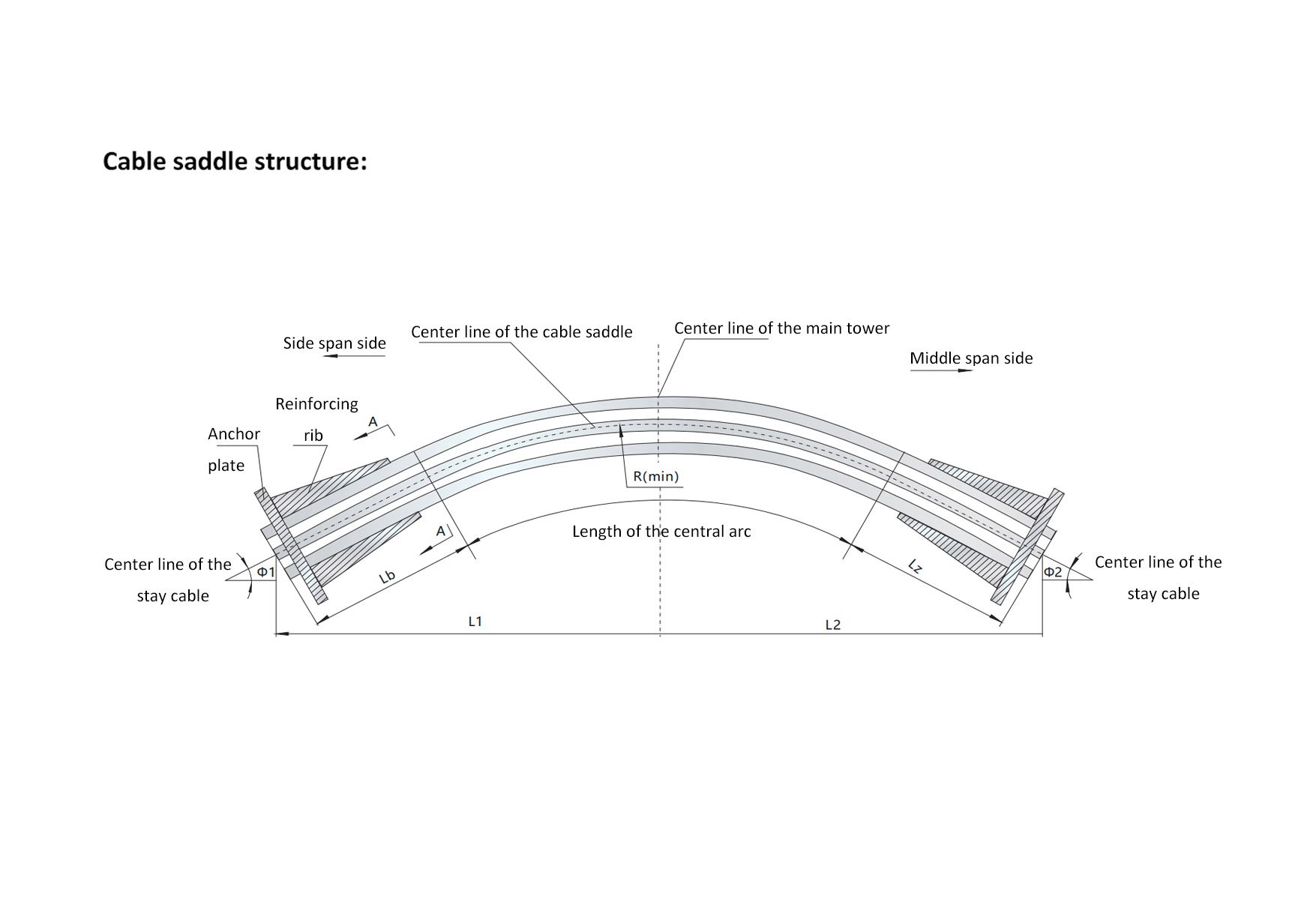
Cable saddle structure:
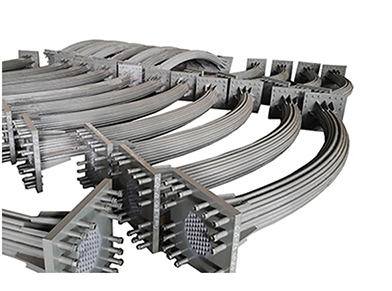
Using wire splitting technology, the guide steel pipe in the cable saddle bears the mutual extrusion of the steel strands caused by the tensioning of a single strand. The steel strands are evenly stressed, and the cable saddle plays a good role in dispersing and evenly transferring the load. The lower part of the cable saddle will not form an unfavorable stress concentration, which can effectively improve the stress distribution in the tower; our company can provide two forms of wire splitting tube cable saddles: steel pipe assembly welding and bundling wire splitting tube cable saddle and box-type plastic wire splitting tube cable saddle.
In the two types of wire-tube saddles, the steel strands independently pass through the wire-tubes and are anchored on the box girders at both ends, so that each steel strand can remain parallel inside the saddle, the steel strands are evenly stressed, the concrete splitting stress is small, and the unbalanced cable force on both sides of the main tower is resisted by the friction between the steel strands and the inside of the saddle. Anchor blocks are set at both ends. During the construction and operation of the bridge, the function of single cable replacement can theoretically be realized.
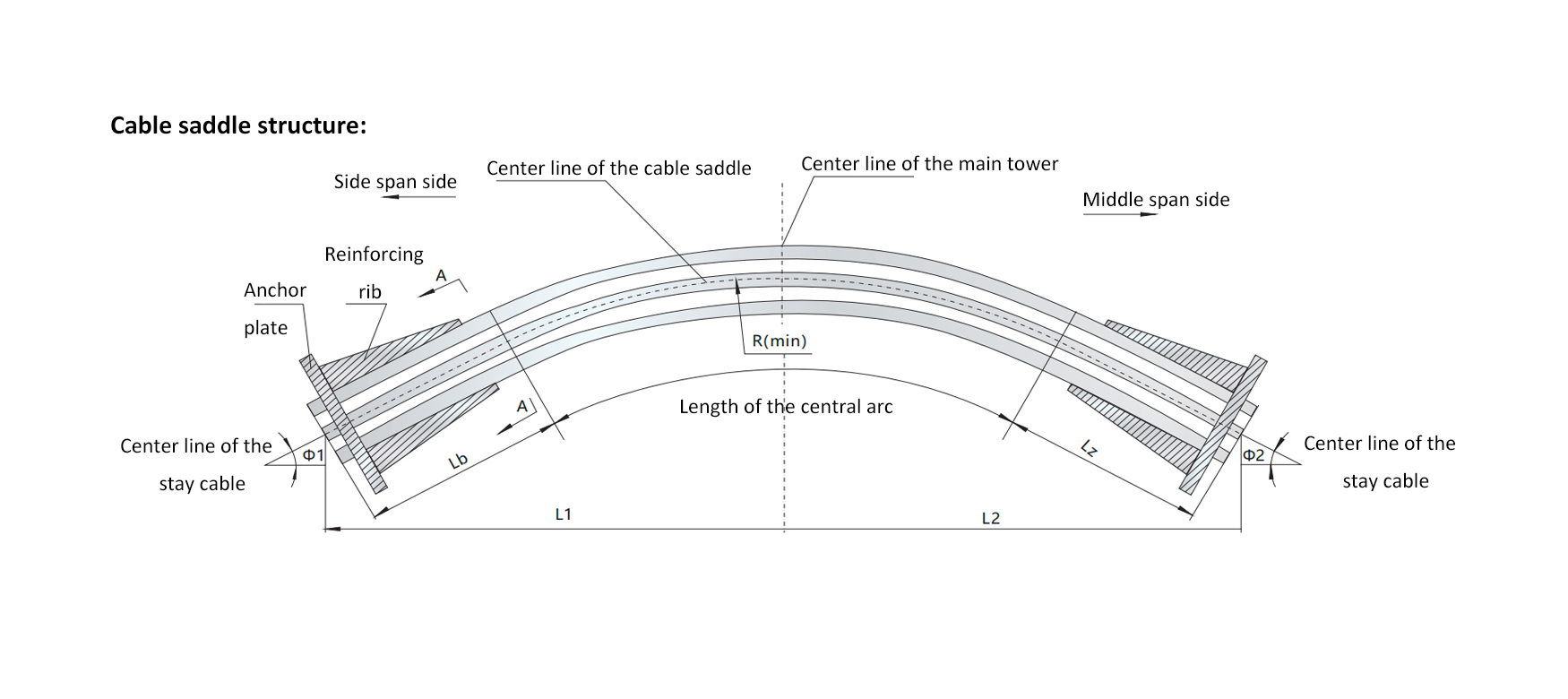
parameters of split-tube saddle:
Cable specifications | Anchor base plate | Bending radius (Rmin) | Main tower side span side | Length of the central arc (Ly) | Main tower middle span side | Length overall(L) | |||||
☐T | H | Θ1 | L1 | Lb | Θ2 | L0 | Lz | ||||
YXLAT15-19 | 400 | 30 | 2000 |
Θ1,L1,Lb,Ly,θ2,L2,Lz, can be determined according to the design requirements. | |||||||
YXLAT15-22 | 500 | 35 | 2000 | ||||||||
YXLAT15-27 | 500 | 35 | 2000 | ||||||||
YXLAT15-31 | 500 | 35 | 2000 | ||||||||
YXLAT15-37 | 500 | 35 | 2000 | ||||||||
YXLAT15-43 | 550 | 45 | 2000 | ||||||||
YXLAT15-55 | 550 | 45 | 2000 | ||||||||
YXLAT15-61 | 550 | 45 | 2000 | ||||||||
YXLAT15-73 | 600 | 50 | 2000 | ||||||||
YXLAT15-91 | 600 | 50 | 2000 | ||||||||
Anti-skid anchor:
On the market, the cables of extradosed cable-stayed bridges are supported by tower mounted cable saddles. Due to structural reasons, it is inevitable that the cables on both sides of the tower will experience unbalanced forces during construction and operation. Therefore, the cables on the saddle section need to be restricted by installing anti slip anchors at both ends of the saddle to fix the cables.
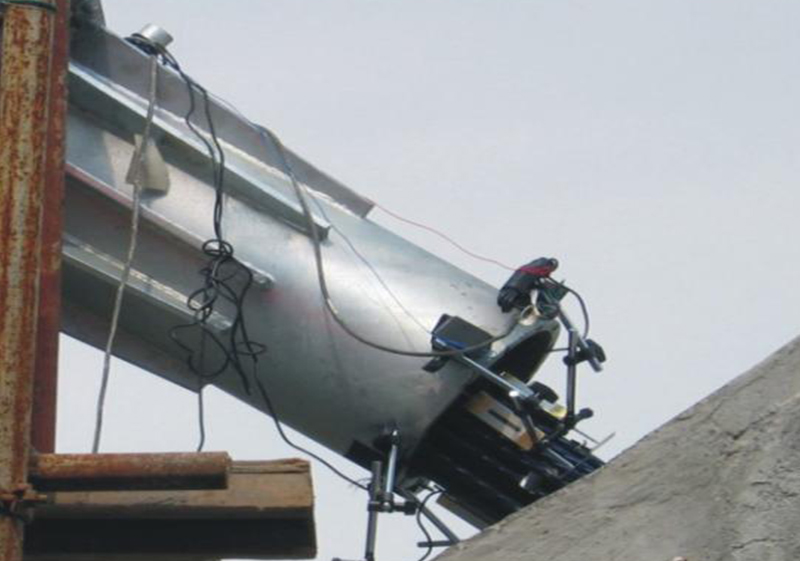
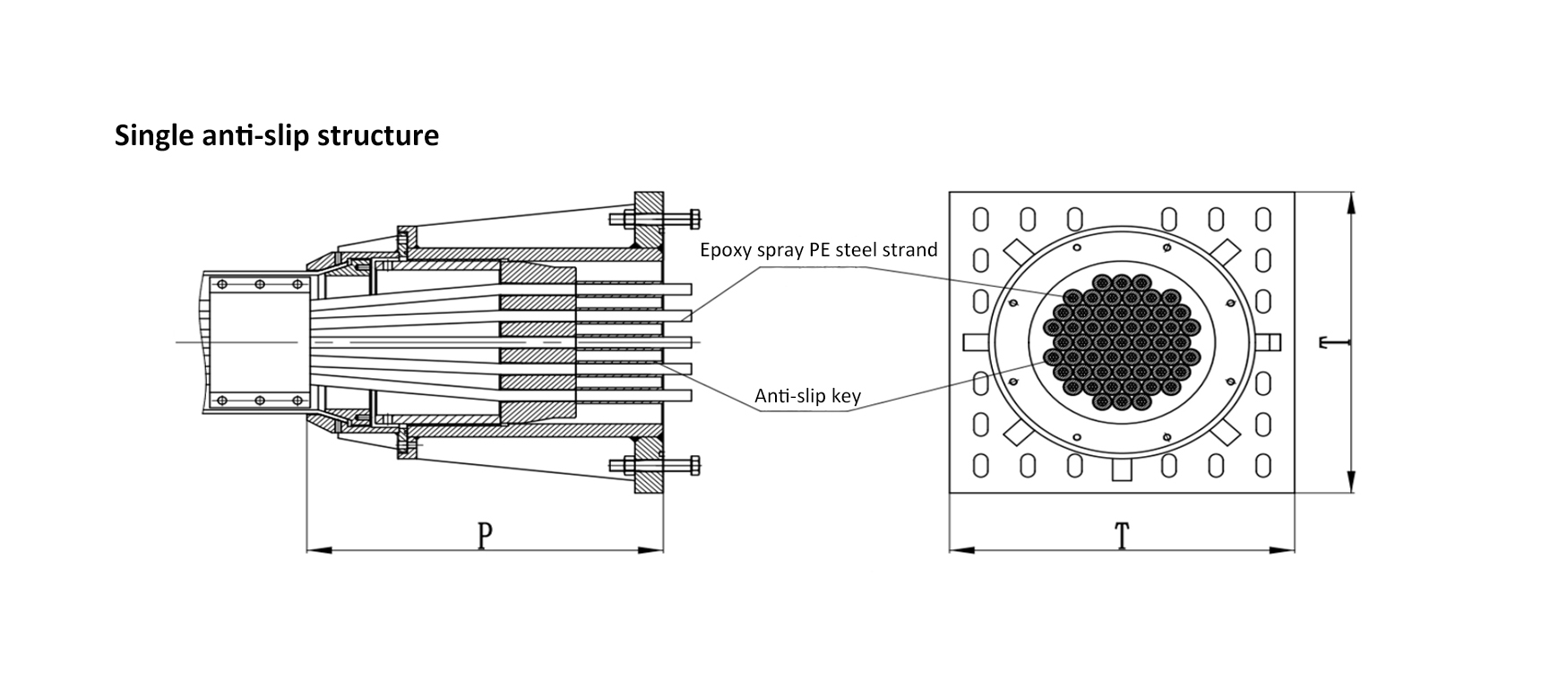
Anti slip anchors are classified according to their structural form:
(1)Epoxy mortar wrapped anti slip anchoring device, with evenly distributed steel strands inside the anchoring device. The filled epoxy mortar fully wraps with each steel strand, ensuring uniform and reliable anti slip force, effectively overcoming the unbalanced force on both sides of the cable during bridge operation;
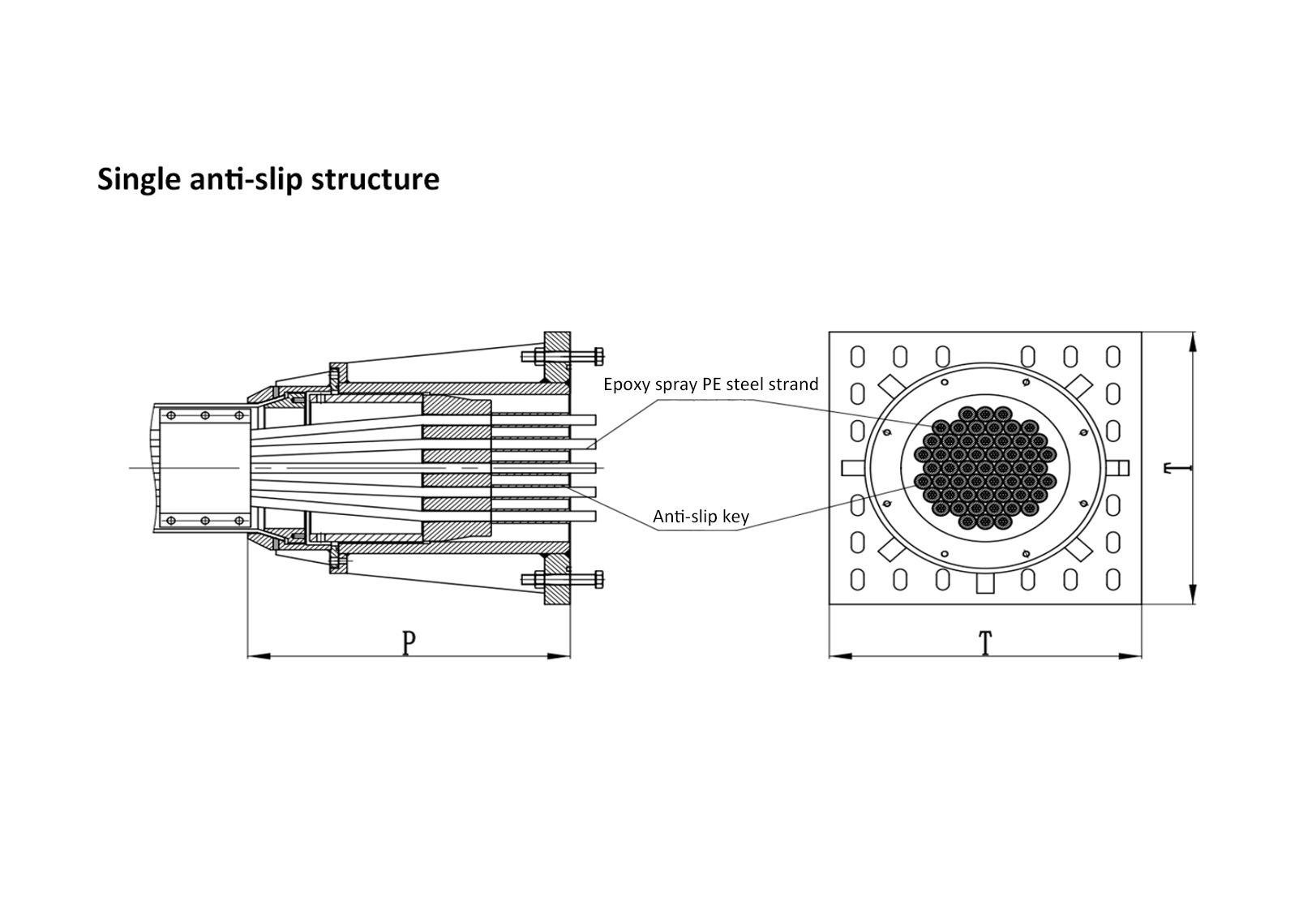
(2)A single replaceable anti slip anchoring device is used, in which each steel strand is equipped with an anti slip key, which bears the anti slip force. The anti slip force is uniform and reliable, effectively overcoming the unbalanced force on both sides of the cable during bridge construction and operation, and allowing for single replacement of the cable.
Cable anchoring System:
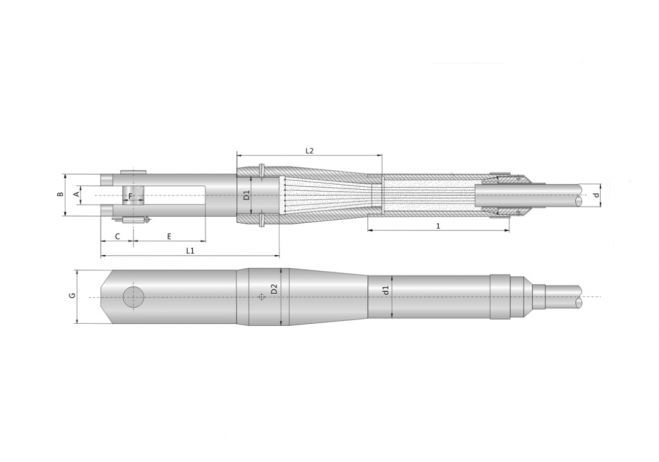
The cable anchoring system consists of an anchor plate, a clip, a nut, a sealing tube, a sealing device, a protective cover and anti-corrosion materials.
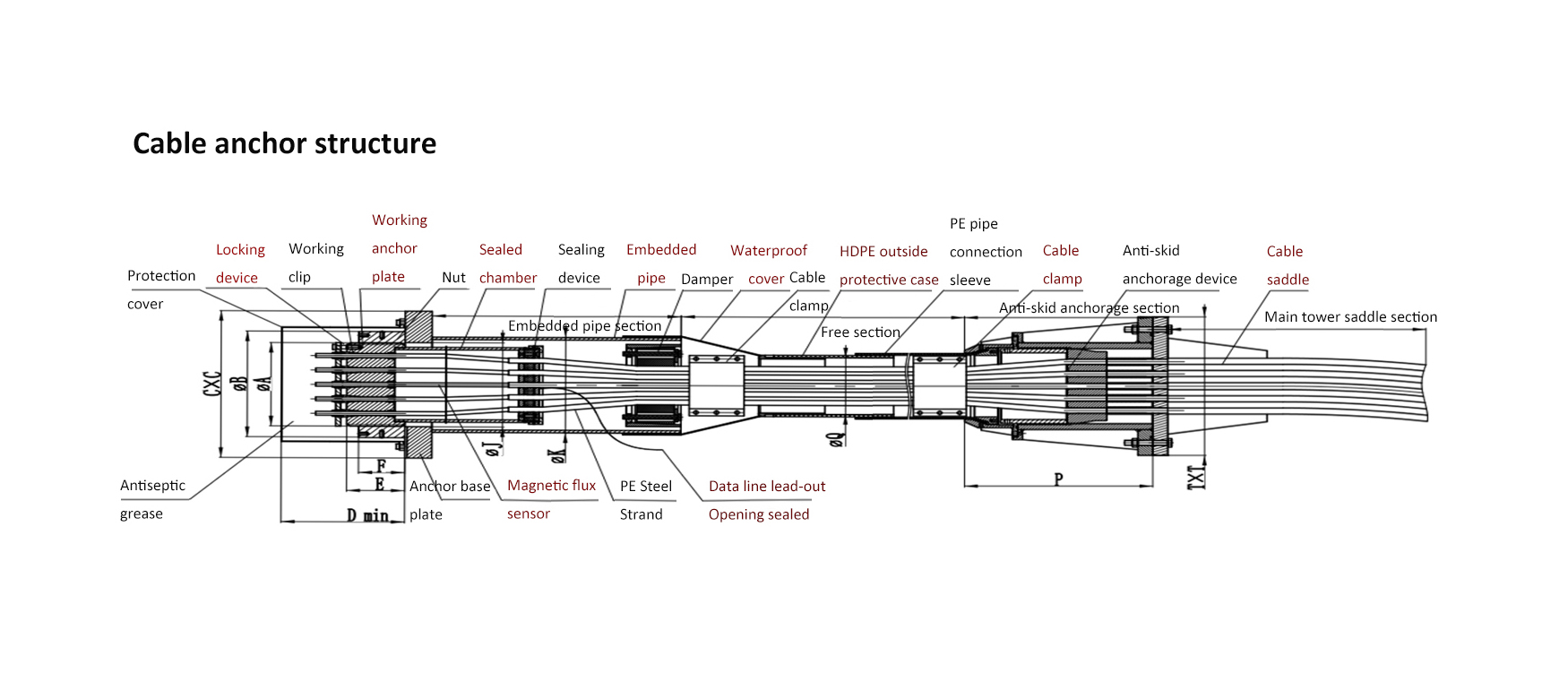
Cable anchors specification structure dimension parameter table (Unit:mm)
Cable specification | Anchor plate | Nut | Protection cover | Anchor base plate | Embedded pipe | HDPE protection tube | Anti-skid anchorage device | Magneticflux sensor(options) | |||||
Round tube | Half tube | ||||||||||||
ΦA | E | ΦB | F | Dmin | ☐C | ΦJ | ΦK | ΦQ | ΦQ | ☐T | P |
Three anchors are installed at each end. | |
YXLAT15-19 | Φ220 | 120 | Φ290 | 90 | 400 | 350 | Φ230 | Φ245 X 8 | Φ160 | Φ140 | 400 | 700 | |
YXLAT15-22 | Φ245 | 125 | Φ320 | 95 | 400 | 390 | Φ255 | Φ273 X 9 | Φ180 | Φ180 | 500 | 775 | |
YXLAT15-27 | Φ270 | 140 | Φ345 | 105 | 400 | 420 | Φ280 | Φ299 X 9 | Φ180 | Φ180 | 500 | 775 | |
YXLAT15-31 | Φ270 | 140 | Φ345 | 105 | 450 | 450 | Φ280 | Φ299 X 9 | Φ200 | Φ180 | 500 | 775 | |
YXLAT15-37 | Φ285 | 150 | Φ360 | 110 | 450 | 480 | Φ295 | Φ315 X 10 | Φ200 | Φ180 | 500 | 775 | |
YXLAT15-43 | Φ310 | 160 | Φ395 | 125 | 450 | 520 | Φ320 | Φ340 X 10 | Φ240 | Φ225 | 550 | 900 | |
YXLAT15-55 | Φ330 | 170 | Φ420 | 135 | 450 | 570 | Φ340 | Φ360 X 10 | Φ240 | Φ225 | 550 | 900 | |
YXLAT15-61 | Φ360 | 175 | Φ450 | 145 | 450 | 600 | Φ370 | Φ390 X 10 | Φ260 | Φ225 | 550 | 900 | |
YXLAT15-73 | Φ380 | 190 | Φ480 | 155 | 450 | 650 | Φ390 | Φ410 X 10 | Φ280 | Φ255 | 600 | 1000 | |
YXLAT15-91 | Φ430 | 215 | Φ540 | 185 | 450 | 720 | Φ440 | Φ465 X 10 | Φ280 | Φ255 | 600 | 1200 | |
In the cable anchor of the extradosed cable-stayed bridge, three holes are selected at each end to install magnetic flux sensors for measuring the tension of a single cable, forming a cable system for the extradosed cable-stayed bridge. The cable tension is measured and calculated based on the principle of isotension method, which can monitor the uniform force of a single steel strand.
Combining magnetic flux sensor technology with cable manufacturing technology, while ensuring the basic performance of the cable such as load-bearing and durability, and without changing the original structural dimensions and construction process, intelligent upgrades are carried out to provide a basis for the collection and monitoring of cable tension information, and provide a basis for monitoring and analysis and evaluation of the safe operation of the structure.
The most basic manual cable tension measurement can be realized by using the magnetic flux sensor and the matching measuring instrument (magnetic elastic instrument). By integrating the sensor signal, configuring the instrument box, switch hub, and address controller, an offline cable tension monitoring system can be constructed. On the basis of the offline cable tension monitoring system, adding data remote transmission and monitoring software can form a real-time online cable tension monitoring system.
PACKAGE
1) All the products are packed with seaworthy packing.
2) Customer's special requirement for packing can be satisfied.
3) Air freight; sea freight and truck freight are all available.
RELATED PRODUCTS

Yuanxian High-tech Material is a company serving a worldwide customers base providing innovative and reliable product solution that recognizes the value of customer care.
+86 180 2006 1362
Haitai Huake Third Road No.1, Huayuan Industrial Zone, Binhai High Tech Zone, Tianjin, china
Quick Links
Product Category

Request a Quote
Welcome to subscribe toour email message!

Send a Message