EN
Price And Market Trend
Apr. 15, 2026
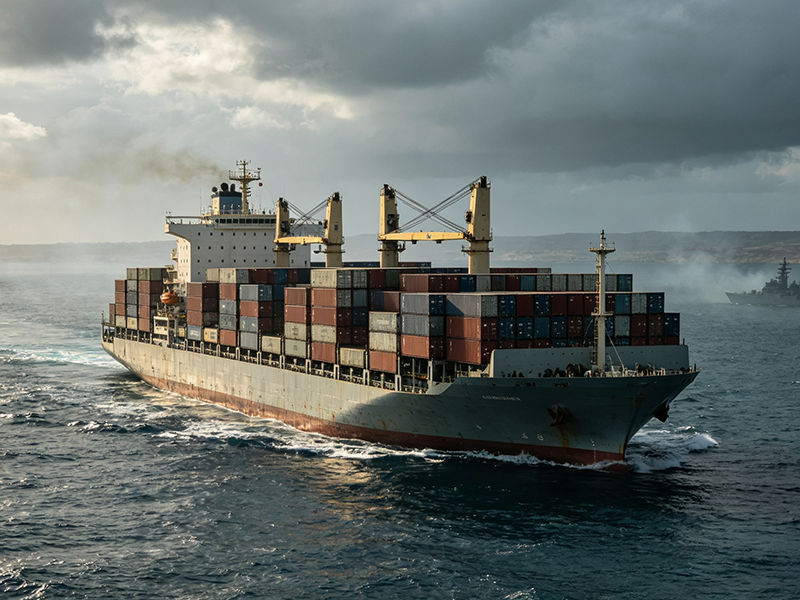
In mid-April 2026, the global shipping market has exhibited a pronounced trend of structural divergence. Freight rates on routes to North America and the Middle East have continued to rise, while those on European routes have come under downward pressure, leading to a widening gap in performance across different trade lanes. This divergent trend is the result of a confluence of factors, including supply-demand dynamics, geopolitical tensions, and the global economic cycle.
At present, navigation through the Strait of Hormuz has not fully resumed. Vessels are required to take detours or subject to stricter controls, resulting in longer voyage durations. Meanwhile, international oil prices have trended upward, coupled with rising fuel costs and war risk insurance premiums, leading to a notable increase in overall operating expenses.
I. Performance of Core Routes and Driving Factors
(1) North America Routes: Tight Space and Leading Freight Rate Increases
The North America route has been the main driver of the current round of container freight rate hikes, with the West US route recording particularly strong growth. Current spot freight rates from major Chinese ports to base ports on the US West Coast have exceeded USD 2,500 per FEU, representing a weekly increase of more than 8%. Rates to base ports on the US East Coast have surpassed USD 3,500 per FEU, up nearly 5% week-on-week. Most popular sailings on the US East Coast route are approaching full capacity, and booking difficulties are gradually rising.
This upward trend is driven by a dual logic of supply contraction and steady demand. On the supply side, major shipping lines have precisely regulated market capacity through proactive blank sailings and collaboration within shipping alliances, significantly improving space utilization rates and avoiding overcapacity. On the demand side, the US consumer market has demonstrated strong resilience, coupled with the release of periodic restocking demand by enterprises, providing solid fundamental support for shipping demand. The combined effect of supply and demand has driven freight rates on North America routes steadily higher.
(2) Middle East Routes: Geopolitical Tensions Push Up Freight Rates
Persistent geopolitical tensions in the Middle East have become the primary catalyst for rising freight rates on Middle East routes including the Persian Gulf. Current freight rates on this route stand at approximately USD 4,100 per TEU, up nearly 5% week-on-week.
Geopolitical risks have directly translated into a sharp increase in shipping operating costs, which manifests in three aspects: First, vessels have been forced to alter routes to avoid high-risk waters, prolonging overall voyage duration and significantly increasing fuel consumption. Second, war risk insurance premiums have surged more than tenfold, imposing substantial additional costs on shipping lines. Third, uncertainties in vessel capacity deployment on the Red Sea route have led to persistent tightness in effective regional capacity, further exacerbating upward pressure on freight rates.
Several shipping lines have explicitly announced plans to raise freight rates on Middle East-related routes in April to pass on soaring operating costs to shippers, with the full risk premium from geopolitical tensions reflected in freight levels.
(3) Europe Routes: Sustained Downward Freight Rate Trend
In sharp contrast to North America and the Middle East, the European shipping market remains weak. Freight rates from major Chinese ports to base ports in Europe have fallen by more than 6% week-on-week, while rates to the Mediterranean have dropped by over 3%. Although some shipping lines have attempted to stabilize rates by imposing emergency fuel surcharges, they have been unable to reverse the overall downward trend.
The core cause is a severe imbalance in supply and demand, with no momentum for freight rate increases. On the demand side, Europe’s economic recovery has been slow, and its manufacturing PMI has remained below the contraction threshold for an extended period. Sluggish real economic performance has directly led to weak import demand and a substantial decline in cargo volumes. On the supply side, carriers have exercised insufficient capacity control on European routes, resulting in excess space supply. With supply far outpacing demand, rising operational costs cannot be passed through to end freight rates, ultimately leaving European route freight rates under persistent downward pressure.
(4) Other Routes: Significant Regional Variations
Beyond the three core routes above, other short-haul and deep-sea routes worldwide have displayed marked regional divergence, with upward or downward movements mainly dependent on local trade demand and seasonal factors, as detailed below:
Southeast Asia, a key short-haul route, has seen modest but stable freight rate increases supported by heightened intra-regional trade activity and robust cross-border trade between China and ASEAN. The Australia and New Zealand route is in its peak season for agricultural exports, with concentrated shipments driving a short-term surge in shipping demand and notable freight rate increases, making it a standout performer among short-haul routes. The South America route has trended similarly to Europe, with freight rates continuing to decline amid local economic volatility and weak import demand. Rates at some minor ports have even fallen to two-year lows, sharply compressing profit margins for shipping operators on this route. In addition, certain feeder routes in Africa have maintained stable freight rates with no major fluctuations, supported by a mild recovery in bulk commodity transportation demand.
II. Future Market Trend Projection
In the short term, the “strong US, weak Europe” divergence pattern in the global container shipping market will persist. The North America route is entering an intensive period of long-term contract negotiations, with shipping lines displaying strong price-supporting intentions, making a strong, volatile freight rate performance highly likely. The weak demand outlook for the European route will remain difficult to improve, and freight rates will stay under pressure. Further escalation of geopolitical tensions in the Middle East could drive up overall global shipping costs.
Import and export enterprises should adopt differentiated logistics plans according to the characteristics of each route: on North America routes, space and long-term contract rates can be locked in in advance to hedge against volatility risks; for the European market, transportation plans should be optimized to control costs via transshipment or multimodal transport; and on Middle East routes, shipment schedules should be reasonably planned with close monitoring of geopolitical developments.
HOT PRODUCTS

Yuanxian High-tech Material is a company serving a worldwide customers base providing innovative and reliable product solution that recognizes the value of customer care.
+86 180 2006 1362
Haitai Huake Third Road No.1, Huayuan Industrial Zone, Binhai High Tech Zone, Tianjin, china
Quick Links
Product Category

Request a Quote
Welcome to subscribe toour email message!

Send a Message