EN
Price And Market Trend
Oct. 10, 2026
Entering October, the international shipping market has not sustained its previous one-sided upward trend but has shifted into a phase of high-level consolidation. After peaking at a yearly high, the composite freight index has posted consecutive slight declines, bringing the rally to a temporary halt. Viewed over a longer cycle, however, current absolute rate levels remain significantly above both last year's comparable period and the five-year average. This stalemate — "unable to rise further, yet lacking room to fall" — defines the market's underlying tone this month. Understanding this landscape requires analysis across four dimensions: capacity, demand, route structure, and pricing behavior.
I. Capacity Restored
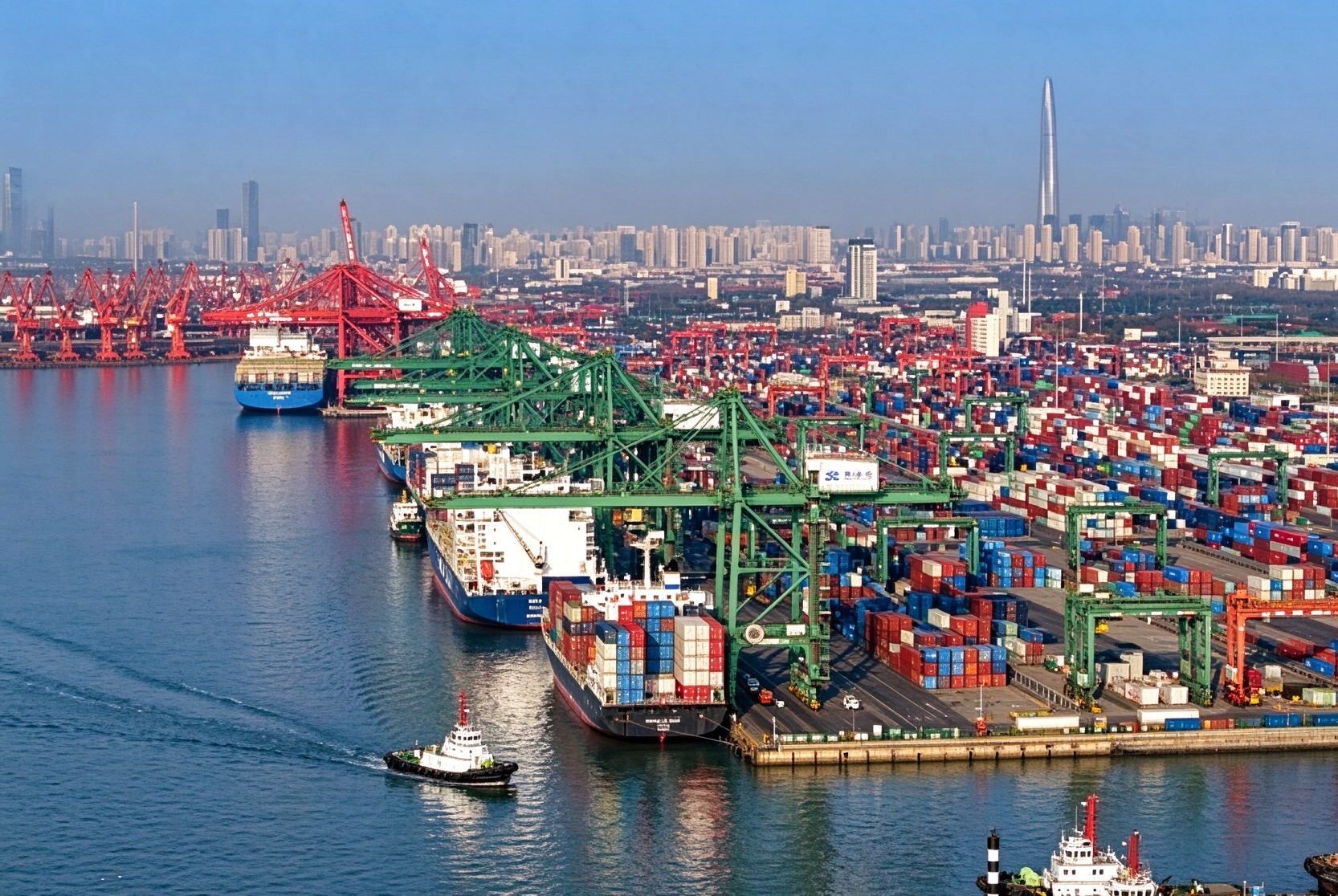
The direct trigger of the current correction is the loosening of the key variables that previously supported freight rates. Capacity deployment on the trans-Pacific trade has increased markedly, congestion at major Chinese ports has gradually eased, and vessel turnaround efficiency has recovered. On the Europe trade, a growing number of liner services have resumed transit via the Suez Canal, shortening voyages and releasing capacity, thereby filling the capacity gap created by the earlier diversion.
Notably, this reflects no substantive contraction in global cargo demand, but rather the conversion of nominal capacity into effective capacity. What underpinned high rates previously was not a genuine shortage of vessels, but a "loss of effective capacity" caused by port congestion, schedule delays, and service adjustments. As these disruptions subside, rates naturally revert toward fundamentals. This also implies that once fresh disruptions emerge — typhoons, strikes, geopolitical conflict — rates retain the basis for a rapid rebound.
II. Route Divergence
The most notable change this month is that major routes have ceased moving in tandem and are trending in distinct directions. North American routes have edged down slightly from earlier highs but remain at relatively elevated levels, with transport demand holding steady. European routes are under visible pressure: demand lacks growth momentum, new vessel capacity continues to enter service, and the diversion effect weakens, pushing rates steadily lower. Southeast Asian routes have moved counter-trend and remain firm — among the few resilient markets — supported by pre-holiday shipment volumes and persistent regional supply-chain bottlenecks. Middle East routes, affected by geopolitical conditions, show amplified volatility, though overall risk remains contained.
The essence of this divergence is the manifesting of differing supply-demand fundamentals across trades. The experience of a broad-based rally no longer applies; assessments must be made route by route and period by period, rather than inferring a specific trade's direction from the composite index.
III. Hike Uncertainty
Carriers' rate-increase actions this month have been notably frequent. Several leading liner companies have issued adjustment notices covering the trans-Pacific, Asia-Europe, Mediterranean, and North Africa trades, in forms ranging from general rate increases and peak season surcharges to bunker adjustment factors. On paper, the magnitude appears substantial. Historically, however, a visible gap often exists between announced and actual transacted rates — particularly on trades where demand support is insufficient, where carrier hikes tend to be "announced loudly, implemented quietly," ultimately landing only partially or being deferred.
Whether hikes materialize hinges on two factors: whether cargo volume can sustain them, and whether carriers can effectively contract capacity through blank sailings. The share of blank sailings on some routes has risen, lending support to increases; yet the seasonal post-holiday decline in volumes will act as a counterweight. Rate-increase notices warrant attention but not overreaction — the priority is managing booking rhythm rather than locking in rates out of panic.
IV. Surcharges Rising
Beyond base ocean freight, the influence of various surcharges on total cost is steadily expanding. Bunker adjustment factors, peak season surcharges, congestion fees, emissions-related charges, and canal surcharges are numerous, and their calculation methods and scope of inclusion vary considerably between carriers. For the same route and container type, quotes from different forwarders may differ significantly, largely depending on whether surcharges are folded into an "all-in" rate.
When comparing quotes, one should not look at base ocean freight alone. Forwarders should be asked to provide a complete cost breakdown covering origin local charges, ocean freight, and all applicable surcharges, while clarifying any additional charges that may arise at destination — thereby avoiding unexpected bills after cargo arrival.
Summery
In a word, October freight rates lack the fundamental support for a unilateral rise, yet also lack the conditions for a deep decline; range-bound volatility remains the prevailing tone. A prudent approach is as follows: for firmer trades such as Southeast Asia, book early and secure space promptly; for pressured trades such as Europe, adopt a watchful stance rather than rushing to accept increases; for more volatile trades such as the Middle East, allow ample logistics buffer time, and specify both rate validity and cost composition clearly in the contract.
HOT PRODUCTS

Yuanxian High-tech Material is a company serving a worldwide customers base providing innovative and reliable product solution that recognizes the value of customer care.
+86 180 2006 1362
Haitai Huake Third Road No.1, Huayuan Industrial Zone, Binhai High Tech Zone, Tianjin, china
Quick Links
Product Category

Request a Quote
Welcome to subscribe toour email message!

Send a Message