EN
Price And Market Trend
Jun. 03, 2026
Export ocean freight rates have climbed for five consecutive weeks across all shipping routes. The core driving forces come from the triple impact of the US tariff window period, collective price hikes by shipping companies, and the increase in fuel costs due to geopolitical conflicts. The 10% temporary global tariff imposed by the United States under Section 122 of the Trade Act of 1974 will expire on July 24.
The market is generally concerned about the subsequent tightening of policies, and Asian exporters are rushing to clear customs and ship goods, with a surge in booking space on the US route. Coupled with volatile Red Sea and Middle East geopolitics, the soaring fuel prices, and the concentrated price hikes by major shipping companies in June have led to a rapid imbalance between supply and demand, causing freight rates on major global routes to rise significantly and the cost of foreign trade logistics to increase markedly.
I. Latest Market Conditions
This round of price hikes has a wide coverage, a large increase, strong sustainability, and a clear upward trend.
The index has risen for five consecutive weeks, with a general increase across all routes: The latest Shanghai Containerized Freight Index (SCFI) stood at 2,571.73 points, surging by 353.58 points in a single week, marking the fifth consecutive week of increase. Among them, the freight rate for the European route was reported at $2,475 per TEU, with a weekly increase of 29.92%, approaching the new high of the stage.
Quotation for main routes (Early June):
1. US West Coast: USD 4,149 per FEU (+31.54% Week-on-Week)
2. US East Coast: USD 5,333 per FEU (+23.64% Week-on-Week)
3. North Europe: USD 2,475 per TEU (+29.92% Week-on-Week)
4. Mediterranean: USD 3,750 per TEU (+16.93% Week-on-Week)
The prices in South America, the Persian Gulf and Australia and New Zealand rose simultaneously. The prices in the near-sea areas of Southeast Asia remained stable with a slight increase. A general upward trend across all shipping routes was established.
II. Core Drivers Behind Freight Increase
1.The tariff window period has forced a sudden surge in short-term demand
The 10% temporary tariff imposed by the United States will expire on July 24th. After its expiration, it will either be extended or intensified, with high uncertainty. To avoid risks, Asian exporters have been concentrating on scheduling production in advance and rushing to ship to the US route. The space on the US route has been sold out ahead of schedule, directly pushing up spot freight rates.
2. Shipping companies collectively raised prices, and additional surcharges were added during peak seasons
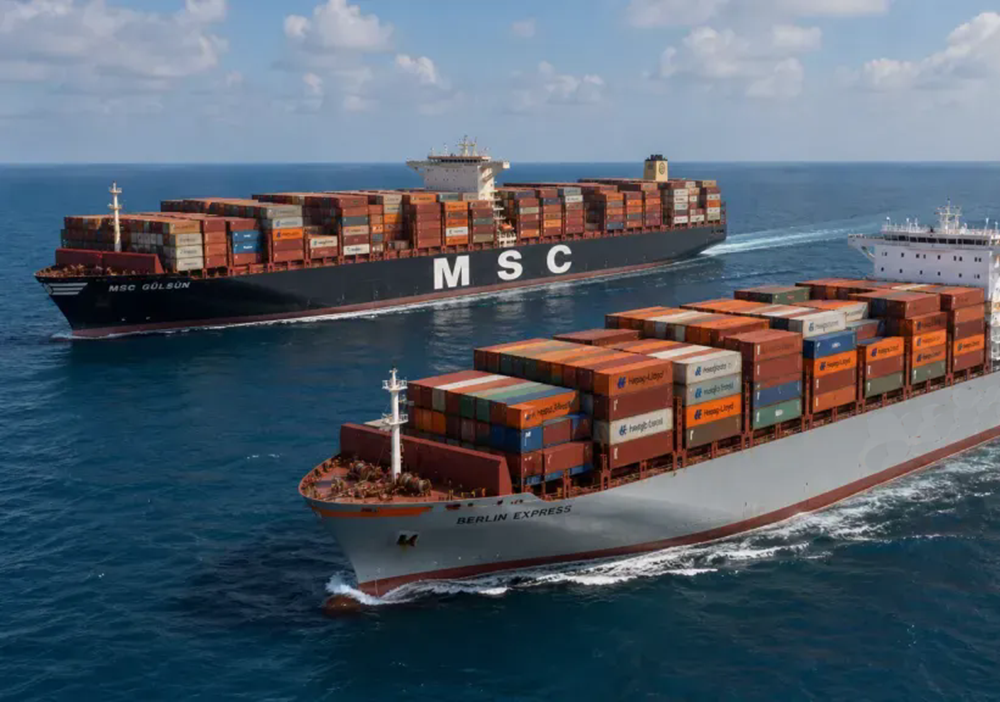
Since the end of May, MSC, Maersk, CMA CGM and Hapag-Lloyd have successively issued price increase letters:
· MSC: Effective Jun 15, +USD 6,000 per 40HQ for Far East-North Europe trades
· Maersk: Mid-June peak season surcharge of USD 2,000 per FEU applicable to all US inbound cargo
· Certain routes have seen freight rates double since early May, with peak increments exceeding 150%
3.Geopolitical conflicts have pushed up fuel and detour costs
Passage through the Red Sea and the Strait of Hormuz has been blocked. Most ships have to detour around the Cape of Good Hope, increasing their voyage by 7 to 10 days. The price of Marine fuel has soared by nearly 70%, and the cost pressure has been significantly passed on to freight rates.
III. Later Market Trend
In the short term (June), the situation of the maritime shipping market remains high and difficult to lower, with tight space. June is a traditional peak season combined with the peak period of tariff rush transportation. There is a shortage of shipping space and frequent container dumping. Freight rates will remain at a high level with fluctuations, and the probability of a significant drop is extremely low.
The medium and long-term (July to December) trend of the maritime shipping market is constrained by multiple variables:
· New ships are being delivered in a concentrated manner, and transportation capacity is gradually being released.
· The Red Sea situation, oil prices, and fluctuations in global demand continue to affect costs and cargo volumes.
· After the tariff policy is implemented, the rush to ship will subside and freight rates may fall from their peak.
Conclusion
The current sharp increase in ocean freight rates is the result of the combined effect of concentrated shipments during the tariff window period, active price control by shipping companies, and the rise in fuel costs due to geopolitical conflicts. It is characterized by a large increase, full coverage, and an earlier peak season.
The short-term tightness of cabin space and the high pattern of freight rates are hard to change. In the medium and long term, as transportation capacity is deployed and the rush to transport subsides, the market will fluctuate at a high level with increased uncertainty, and the cost of export logistics will continue to be under pressure. It is suggested that relevant enterprises reasonably calculate the comprehensive cost, lock in the shipping space in advance and optimize supply chain scheduling instead of adopting a wait-and-see attitude.
HOT PRODUCTS

Yuanxian High-tech Material is a company serving a worldwide customers base providing innovative and reliable product solution that recognizes the value of customer care.
+86 180 2006 1362
Haitai Huake Third Road No.1, Huayuan Industrial Zone, Binhai High Tech Zone, Tianjin, china
Quick Links
Product Category

Request a Quote
Welcome to subscribe toour email message!

Send a Message